Category: Politics

WhatsApp Image 2026-06-16 at 14.12.14

Executive Power Without Restraint: How the Collapse of the Rule of Law Is Re-shaping Governance in Uganda

The rule of law is the central pillar upon which constitutional governance rests. When it weakens, executive power ceases to be bounded by law and instead becomes governed by discretion, coercion, and fear. The steady erosion of the rule of law has fundamentally altered the character and exercise of executive authority, raising grave constitutional and moral questions.

Articles 98 and 99 of the Constitution vest executive authority in the President, designating him both Head of State and Government, and mandating Him to execute the laws of Uganda. This authority, however, is not absolute. It is explicitly constrained by the Constitution itself; reinforced by the presidential oath, which requires the President to preserve, protect, and defend the Constitution and to govern according to the law.

Executive power is therefore fiduciary in nature, held in trust for the people, not exercised above them. When state actions routinely violate constitutional guarantees, the executive ceases to be a constitutional custodian and instead becomes a source of constitutional injury.

One of the clearest manifestations of the collapse of the rule of law is the routine use of excessive force by the police. Public order management has increasingly been characterised by violent dispersals, arbitrary arrests, and disproportionate use of lethal and non-lethal force against civilians. The police, constitutionally mandated to protect life and property, have in many instances become an instrument of intimidation. When law enforcement acts with impunity, executive power shifts from lawful authority to raw coercion, undermining public trust and eroding legitimacy of the state itself.

Since 2020, we’ve witnessed a disturbing rise in abductions, often carried out by armed men in unmarked vehicles, with victims held incommunicado for days or weeks. Families are left without information, courts are bypassed, and legal safeguards are rendered meaningless. These abductions signal a profound breakdown of constitutional order. Executive power, when exercised outside the legal framework, becomes clandestine and unaccountable. Absence of transparency is not incidental; it is the very mechanism through which unlawful power sustains itself.

The Constitution guarantees the right to liberty and the right to be produced before a court within prescribed timelines. Yet prolonged detention without trial has become increasingly common, especially in politically sensitive cases. Detention without trial is not merely a procedural violation; it is an assertion that executive convenience outweighs constitutional rights. It converts justice system into an accessory rather than a check on power, hollowing out the separation of powers that underpins democratic governance.

Perhaps the gravest indictment of executive overreach is the continued use of torture. The prohibition against torture is absolute, non-derogable under both the Ugandan Constitution and international human rights law. No emergency, no political objective, and no security justification can excuse it. When torture occurs, it represents the complete abandonment of lawful governance. It signals that the executive has stepped outside the moral and legal boundaries of the Constitution, replacing law with cruelty as a tool of control.

The convergence of police brutality, abductions, unlawful detentions, and torture points to a deeper constitutional crisis; one in which executive authority increasingly operates without restraint. A state that governs through fear rather than law may command obedience, but it forfeits legitimacy. Restoring the rule of law is therefore not an abstract legal demand; it is a constitutional necessity to reclaim executive power as an instrument of service rather than domination.

Without the rule of law, executive power does not strengthen the state, it corrodes it from within.

Email: sarah.bireete@gmail.com 

Read More
bireete-sarah-ehorn

Uganda’s Unpaid Medical Interns: A Crisis at the Heart of Public Healthcare

Written by Dr. Sarah Bireete

Uganda’s public health system is facing a deepening moral, legal, and policy crisis following the government’s refusal to pay medical interns. At the center of this dispute are young doctors who, after years of intense and costly training, are expected to shoulder the backbone of hospital care, without pay. The decision has far-reaching consequences for healthcare delivery, medical education, and the future of the profession in Uganda

Medical interns in Uganda are not observers or trainees in a casual sense. They are frontline healthcare providers. In many public hospitals, interns cover critical staffing gaps, run wards, attend to emergencies, clerk patients, prescribe under supervision, and provide round-the-clock care.

In practice, interns do most of the regular medical work that keeps hospitals functional, especially in regional referral hospitals where shortages of senior doctors are chronic. Demotivating interns through non-payment directly undermines patient care, increases preventable deaths, and overburdens the few fully employed doctors who remain. Refusing to pay interns while continuing to rely on their labor amounts to institutionalized exploitation.

Before internship, a Ugandan medical doctor spends at least five years at university, followed by internship as a mandatory requirement for full registration. Medical education is among the most demanding and expensive courses in the country. By the time students reach internship, many come from families already financially exhausted. Internship pay is therefore not a luxury, it is basic subsistence, covering rent, food, transport, among others.

Denying interns pay after such prolonged investment effectively turns medical training into a pathway of debt, distress, and despair. The situation poses a sharp dilemma, especially for government-sponsored medical students.

On one hand, the state argues fiscal constraints and frames internship as “training.” On the other hand, it compels graduates to serve, posts them to hospitals, assigns shifts, and disciplines them as workers. This contradiction raises fundamental questions. If internship is compulsory national service, why is it unpaid? Why should interns offer an unpaid service in government hospitals? What’s government’s commitment to universal healthcare?

Uganda’s approach stands in stark contrast to practices across much of Africa. In Kenya, Medical interns are salaried government employees, with formal contracts and monthly pay. In South Africa, Interns receive structured remuneration and are fully integrated into the public service payroll. In Rwanda, Internship is funded as part of national health workforce planning, with clear state responsibility. In Ghana, House officers (interns) are paid and recognized as essential health workers.

In these countries, governments acknowledge a basic truth: you cannot sustain a health system on unpaid labor.
Uganda’s refusal to pay interns risks isolating the country, accelerating brain drain, and making medicine unattractive to talented students, especially those from poor backgrounds.

The unpaid internship policy has consequences beyond medical interns themselves. Patients suffer from demoralized staff and service disruptions
Rural and public hospitals face collapse as interns withdraw labor. Medical students reconsider their career choices or plan to leave the country. Public trust in health governance erodes.

Uganda cannot claim commitment to universal healthcare while refusing to pay the very doctors who keep hospitals running. Internship is not charity work; it is essential labor performed after years of specialized training. Government decision undermines its health system, exploits young professionals, and jeopardizes the future of medical education in Uganda.

Paying medical interns is not merely a budgetary decision; it is a test of justice, foresight, and national priorities.

Read More
WhatsApp Image 2026-05-30 at 17.39.45

Constitutional Challenges of Appointing Serving Soldiers who are non UPDF MPs to Cabinet.

By Dr. Sarah Bireete

The appointment of serving military officers to cabinet continues to raise constitutional questions under Articles 113 and 208 of the Constitution.

After the enactment of the 1995 Constitution, serving Soldiers were required to first resign from the army before taking up their positions in Cabinet. The test for this safeguard was the appointment of Gen. Jeje Odongo in 1996 as Minister of State for Defence. He had to first retire from UPDF.

Article 208 establishes the Uganda People’s Defence Forces (UPDF) as a non-partisan, professional, disciplined and national institution subordinate to civilian authority. The purpose of this provision is to ensure that the military serves all citizens equally and remains insulated from partisan political competition. In a constitutional democracy, the military is expected to defend the state and uphold the Constitution, not to participate in political contests or align itself with particular political interests.

Article 113, on the other hand, provided that the President can appoint ministers from amongst MPs and any other citizens qualified to be MP. It was argued that this provision qualifies UPDF MPs to be appointed to Cabinet; an argument that was advanced in 2013 after the controversial appointment of Gen. Aronda as a minister of Internal Affairs as a serving soldier.

Further constitutional questions arise when serving military officers who are not UPDF representatives in Parliament are appointed to Cabinet. Such appointments place active members of a constitutionally non-partisan institution into offices that require overt political engagement. The result is a potential conflict between the duty of political neutrality under Article 208 and the political responsibilities associated with ministerial office under Article 113 of the Constitution.

Continuous military participation in legislative affairs through designated military representatives in Parliament in a multiparty suspension presents a significant constitutional challenge. Appointing additional serving officers to Cabinet outside this framework is an expansion of the military political role beyond what the framers of the Constitution contemplated.

Such appointments blur the distinction between civilian and military authority. One of the cornerstones of constitutional governance is the principle of civilian control over the armed forces. When serving officers simultaneously occupy senior military positions and political executive offices, the separation between military command structures and civilian political leadership becomes less clear. The military is becoming increasingly intertwined with partisan governance.

Further more, the legitimacy of a professional army depends in part on the public perception that it serves the nation rather than a political party or government. When serving officers become the public face of controversial government decisions, criticism directed at government policy may increasingly be directed at the military institution itself.

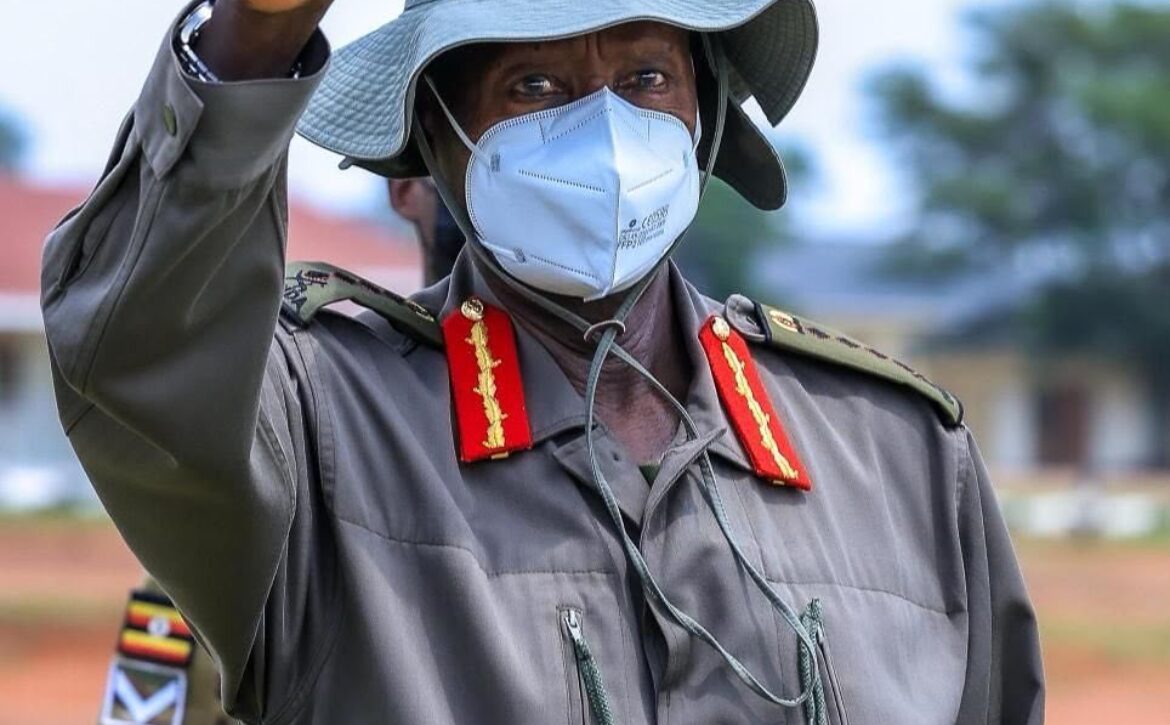
Gen. Katumba Wamala joined cabinet in 2017 when he was an MP representing UPDF in Parliament, a post he retained in the 11th Parliament. The camel applies to Gen. Wilson Mbadi when he was appointed to cabinet in 2024. The two Generals are not UPDF MPs in the 12th Parliament. Their appointment to cabinet before retirement can’t benefit from the Gen. Aronda controversial shield of being MPs, as per Article 113 of the Constitution.

Parliament whose main function is to protect the constitution and promote constitutional governance has a duty to ensure that the two generals exit UPDF before they are approved as ministers in the next cabinet.

As Uganda continues to strengthen its democratic institutions, adherence to both Articles 113 and 208 remains essential to safeguarding civilian rule, constitutionalism and public confidence in armed forces.

Read More
bireete-sarah-ehorn

Power, the Common Good, and the Reckoning It Always Brings.

Public office is not a private estate. It is a trust, temporarily handed to individuals so they may serve the common good, uphold the rule of law, and safeguard the rights of all citizens. History teaches us, repeatedly and without mercy, that leaders who forget this truth often build systems of fear that eventually turn against them. Uganda’s recent experience offers a sobering lesson.

The tenure of Anita Among, now a former Speaker of Parliament, illustrates how the abuse or neglect of institutional responsibility corrodes not only democracy but also the personal security of those who preside over that decay.

As head of the legislature, the Speaker is the custodian of debate, oversight, and accountability. Yet Parliament under her leadership repeatedly failed to fully interrogate some of the most urgent national concerns. Most disturbing was the systematic blocking and stifling of parliamentary scrutiny into the issue of missing persons; Ugandans who disappeared amid arrests, abductions, or security operations. When Parliament is prevented from asking hard questions about the fate of citizens, it ceases to be the people’s shield and becomes an accomplice to silence.

At the same time, the normalization of military overreach into civilian governance continued largely unchecked. The increasing presence of armed forces in law enforcement, political processes, and civic life eroded the constitutional boundary between civilian authority and military power. Parliament, which should have asserted its oversight role, instead appeared subdued. This failure sent a dangerous message: that power could be exercised without accountability, and force could substitute law.

The judiciary did not escape this institutional weakening. Public confidence in the courts steadily declined as citizens watched politically sensitive cases delayed, mishandled, or seemingly influenced. When the legislature fails to defend judicial independence, justice becomes precarious. And when justice becomes selective, no one, no matter how powerful, is ultimately safe.

Today, the irony is unavoidable. The very environment of impunity, institutional compromise, and fear that was allowed to grow has come full circle. The political and legal troubles now facing Anita Among are unfolding within the same weakened system she helped build and shield. This is not merely personal misfortune; it is a structural reckoning. Power that is exercised without regard for law and rights does not protect its wielders, it traps them.

This moment should serve as a warning to all leaders. Public office must be used to strengthen institutions, not bend them. Leaders must protect human rights not out of charity, but out of enlightened self-interest. A country governed by law, transparency, and accountability is one where former officials can live safely beyond office, confident that rules, not vendettas or unchecked power, will govern their fate.

The lesson is clear: when leaders undermine Parliament, tolerate military overreach, and weaken judicial independence, they plant seeds of instability that do not discriminate. The structures you dismantle today are the same ones you will desperately need tomorrow.

True leadership lies in restraint, respect for law, and service to the common good. Anything less may offer short-term power, but it guarantees a long-term reckoning.

Read More
Sarah Bireete

When One Woman Is Used to Silence Many.

By Dr Sarah Bireete 

In recent debates on leadership and accountability, male chauvinists have increasingly weaponised the case of Anita Among to discredit women in leadership as a whole. Instead of interrogating individual conduct on its own merits, they present her example as “proof” that women are unfit to lead. This line of argument is not only dishonest; it is deeply patriarchal. Men accused or convicted of wrongdoing are rarely used to indict all men, yet when a woman falters, her gender is put on trial.

The principle of gender parity in parliamentary leadership and the cabinet is grounded in equality, justice, and representation. It recognises that women make up more than half of the population and therefore deserve fair and meaningful participation in decision-making spaces; committee leadership, speakership positions, and senior ministerial roles. Gender parity is not about tokenism or immunity from scrutiny; it is about equal opportunity, equal responsibility, and equal accountability.

Crucially, criminal or unethical conduct is individual, not biological. The law does not recognise guilt by gender. Accountability must attach to the person who commits an offence, not to women as a class. To argue otherwise is to abandon justice and embrace prejudice. If integrity is the standard, and it must be, then it should apply uniformly to men and women alike, without chauvinistic shortcuts that seek to roll back hard-won gains for women’s leadership.

Using one woman’s alleged failures to undermine gender equality is not accountability; it is backlash. True reform demands that we challenge wrongdoing while defending the principle that women belong in leadership, on merit, in parity, and without prejudice.

For God and My Country

Read More