
PPU Release - President Museveni Clarifies On Sovereignty Bill
The Bill I initiated, was about what we fought for and what the whole of Africa fought for ever since 1900 when the whole of Africa, except for Ethiopia, had been shamefully colonized after 400 years of slave trade because of our egocentric Kings that were spending more energy causing wars among us than uniting us to defend ourselves.
Starting with the Afro-American Pan-Africanists such as Marcus Garvey and the ANC founded in 1912, the African Resistance, assisted by some other factors such as the support of the Socialist Countries of the USSR and China, finally defeated the colonial invasion with the freedom of South Africa in 1994. A whole century spent on that effort for survival as free People.
READ MORE: PPU RELEASE - PRESIDENT MUSEVENI CLARIFIES ON SOVEREIGNTY BILL
NCSA Submission Of Memorandum
We present this memorandum as part of our ongoing engagement in promoting student leadership development, civic participation, and constitutional awareness among young people in higher institutions of learning.
READ MORE: NCSA SUBMISSION OF MEMORUNDUM
ICRAD Submission Parliament
The memorandum outlines key areas of concern and offers practical, evidence-based recommendations aimed at strengthening the bill while ensuring alignment with constitutional principles, existing legal frameworks, and Uganda's international obligations.
READ MORE: ICRAD SUMBISSION PARLIAMENT
EALS Memorandum On The Protection Of Sovereignty Bill
We, the undersigned leadership, in the name of the East Africa Law Society, have the privilege of addressing the Honorable Committees of the Parliament of the Republic of Uganda, on matters pertaining to the Protection of Sovereignty Bill, 2026, currently in consideration for enactment.
We hope that the submission enriches the deliberations thereof and assists both Committees and the House as a whole in arriving at a determination that is consistent with the 1995 Constitution of the Republic of Uganda, the Treaty for the Establishment of the East African Community of 2000, the Constitutive Act of the African Union of 2000, as well as Uganda’s domestic and international obligations under the African Charter on Democracy, Elections and Governance of 2012, the International Covenant on Civil and Political Rights of 1966, the Universal Declaration of Human Rights of 1948, and the 1945 Charter of the United Nations.
READ MORE: EALS MEMORANDUM ON THE PROTECTION OF SOVEREIGNTY BILL (1)
CCG Memorandum to Parliament on the Protection of Sovereignty Bill 2026
The document critically analyzes the constitutionality of Uganda’s Protection of Sovereignty Bill 2026, highlighting legal violations and recommendations.
Introduction and Executive Summary
Bill aims to protect sovereignty by regulating foreign agents and activities.Contends the Bill is unconstitutional, with high vulnerability to legal challenge.Recommends dropping several provisions, especially those granting broad ministerial powers.Assesses cumulative constitutional risks as very high.
READ MORE: CCG Memoradum To Parliament On Protection on Sovereignty Bill 2026
Memorandum Of Submissions On The Protection Of Sovereignty Bill 2026 From The Senior Counsel Forum
The Bill is a 30-clause statute organized in five Parts. Its declared object is to protect the sovereignty of the people of Uganda; to designate the Department responsible for peace and security in the Ministry of Internal Affairs as the regulator of “agents of foreigners”; to provide for the registration of such agents; and to regulate funding from foreigners. The Memorandum identifies a perceived gap created by the absence of a specific law on national sovereignty.
READ MORE: Senior Counsel Forum_Submissions Memorandum on Protection of Sovereignty Bill 2026
Notice Of Meeting to Consider the Protection of Sovereignty Bill, 2026
The PROTECTION OF SOVEREIGNTY BILL, 2026 was read for the first time on Wednesday, 15th April 2026, under Rule 135 (1) of the Rules of Procedure of Parliament. The Rt. Hon. Speaker referred it to a Joint Committee, comprising the Committee on Defence and Internal Affairs and the Committee on Legal and Parliamentary Affairs, for scrutiny and report back under Rule 135 (2).
Pursuant to Rule 213 (2) of Parliament's Rules of Procedure, I am instructed to notify and invite you to the Committee meetings on the Bill as outlined below.
READ THE NOTICE: Notice 1-3
MMAKS Legal Alert - PoS Bill 2026
The Bill is promoted by the Ministry of Internal Affairs and seeks to protect Uganda's sovereignty from foreign interference. It introduces: (a) a mandatory registration regime for any person acting as an "agent of a foreigner"; (b) criminal prohibitions on a wide range of activities associated with foreign funding and influence; (c) a requirement for prior Ministerial approval before receiving foreign financial support above UGX 400 million per year; (d) stringent public reporting and disclosure obligations; and (e) broad inspection and enforcement powers vested in the Ministry of Internal Affairs.
READ MORE: MMAKS Legal Alert - PoS Bill 2026
The Price of Sovereignty - An Economic Impact Assessment of the Protection of Sovereignty Bill, 2026
The Protection of Sovereignty Bill, 2026 seeks to safeguard Uganda’s national interests by regulating foreign influence in domestic affairs. The Bill introduces provisions requiring registration, disclosure, and oversight of individuals and entities deemed to be acting on behalf of foreign interests, alongside restrictions on foreign funding and engagement in policy processes .
READ MORE: The Price of Sovereignty - An Economic Impact Assessment of the Protection of Sovereignty Bill, 2026

Uganda Banker's Association Draft Letter on the Protection of Soveregnty Bill 2026
We further draw your attention to proposals in the bill that work directly againmst the banking industry's response plan to support Government's ATM strategy for tenfold GDP growth that we shared with Ministry of Finance, Planning & Economic Development entails marshaling more capital/funding through various sources & instruments over the plan period to significantly expand private sector credit.
READ THE LETTER: Letter to Attorney General on the Sovereignty Bill_260417_195618
MTN GROUP Potential Impact on the business- Sovereignty Bill
The Protection of Sovereignty Bill, 2026 (the "Bill") was tabled in draft form on 3rd March 2026. If enacted, it would introduce significant regulatory obligations on persons and organizations acting as "agents of foreigners" in Uganda, a definition broad enough to capture multinational companies including MTN Uganda.
READ MORE ON THE SUBMISSION: MTN GROUP Potential Impact on the business- Sovereignty Bill
NCF Sovereignty Bill Advocacy Package
The Protection of Sovereignty Bill 2026 poses an existential threat to Uganda's culture and creative industries (CCI) sector. This package provides the National Culture Forum (NCF) with the analytical tools to engage Parliament, constitutional lawyers, international treaty bodies, and strategic partners before the Bill passes into law.
The Bill's most damaging mechanism is the definition of 'agent of a foreigner' in Clause 1(c). In its current form, this definition captures every Ugandan musician earning streaming royalties from Spotify, Apple Music, YouTube Music, Boomplay, or Deezer. It captures every film producer with an international co-production partner. It captures every theater company funded by a foreign cultural organisation. It captures UPRS, URRO, and UFMI — the three collecting management organisations through which Ugandan rights holders access the global royalty network.
READ MORE: NCF_Sovereignty_Bill_Advocacy_Package
Citizen Petition Against the Protection of Sovereignty Bill, 2026
The citizen petition, authored by Fr. Charles Oyo, opposes Uganda's Protection of Sovereignty Bill, 2026, arguing that it threatens constitutional rights, good governance, and human rights. The petition highlights that the Bill's broad definitions and harsh penalties could criminalize ordinary civic, economic, and religious activities, restrict freedom of expression, association, and civic participation, and place excessive power in the hands of the executive. It also warns that the Bill would negatively impact development cooperation, disrupt essential services, and contradict Uganda's international obligations.
READ MORE: CITEZENARY PETITION 1
Mbarara University Observations and considerations on the Sovereignty Bill 2026
The university highlights that its core functions such as research, international collaborations, academic exchanges, and grant-funded projects often involve partnerships with external entities, and warns that overly restrictive provisions in the bill could disrupt these legitimate activities. MUST therefore advocates for careful refinement of the bill to ensure it protects national interests without hindering higher education institutions’ ability to operate effectively, innovate, and contribute to national development within existing legal and policy frameworks.
READ MORE : Mbarara University Observations-and-considerations-on-the-Sovereignty-Bill-2026
AUTO Letter to Parliament
The Association of Uganda Tour Operators (AUTO) expresses concern over the proposed Protection of Sovereignty Bill, 2026, highlighting that while safeguarding national sovereignty is important, the Bill’s broad and restrictive provisions could severely disrupt Uganda’s tourism sector, which is a major driver of economic growth, foreign exchange, employment, and conservation.
READ MORE HERE: AUTO LETTER TO PARLIAMENT
Sanctions Are Writing Uganda's Laws Including the Sovereignty Bill
Sanctions have done what forty years of opposition politics failed to do. They have entered the room where the regime hides its real power. Not the rally. Not the slogan. Not the yellow shirt. The money. The houses abroad are no longer just houses. The accounts abroad are no longer just accounts. The dollar wires are no longer just wires. The school fees abroad are no longer just family matters. The medical trips abroad are no longer private arrangements. The banks in London, New York, and Washington are no longer quiet corridors for stolen Ugandan money.
READ MORE: sanctions-are-writing-ugandas-laws
FHRIs Memorandum on The Protection of Sovereignty Bill, 2026
The Protection of Sovereignty Bill, 2026 raises serious concerns regarding its compatibility with the Constitution of the Republic of Uganda and its potential implications for Uganda’s reliance on foreign assistance.
As presently framed, several provisions risk undermining fundamental rights and constraining legitimate civic and civil society activity, while broad definitions and extensive ministerial discretion create a substantial risk of abuse and arbitrary enforcement.
READ MORE: FHRIs Memorandum on The Protection of Sovereignty Bill, 2026 - Submitted to the Clerk of Parliament
A Reality Check on the Protection of Sovereignty Bill, 2026
The Protection of Sovereignty Bill, 2026 (Bill No. 13 of 2026), gazetted on 13 April 2026 and introduced for first reading on 15 April 2026, represents one of the most consequential legislative initiatives in Uganda's post-1995 constitutional history. Promoted by the Ministry of Internal Affairs and defended by the Attorney General as a measured, internationally benchmarked instrument targeting covert foreign interference, the Bill proposes mandatory registration of 'agents of foreigners,' criminal penalties of up to twenty years' imprisonment, funding caps requiring prior ministerial approval, and sweeping inspection and enforcement powers.
READ MORE HERE: Academic_Article_Reality_Check_Sovereignty_Bill_2026 (1)
Insurance Industry Position Regarding the Protection of Sovereignty Bill 2026
The Protection of Sovereignty Bill in its current form has the potential to destabilize the insurance industry and may adversely impact the services we offer to other key sectors like oil, gas agriculture, health, manufacturing and more.
READ MORE ON THE LETTER: Insurance Industry Position Regarding the Protection of Sovereignty Bill 2026
Joint Memorandum on The Protection of Sovereignty Bill 2026
We affirm Uganda's sovereignty right to protect itself from unlawful foreign interference. However, we are deeply concerned that the Bill, as presently drafted, would sweep lawful, licensed and heavily regulated telecommunications and mobile money operations with in its scope in ways that the bill does not intend.
FIND OUT MORE: Joint Memorandum on The Protection of Sovereignty Bill 2026-1-12
World Bank Group Submission of Comments on The Protection of Sovereignty Bill, 2026
The International Bank for Reconstruction and Development (“IBRD”), the International Development Association (“IDA”), the International Finance Corporation (“IFC”), the Multilateral Investment Guarantee Agency (“MIGA”), and the International Centre for Settlement of Investment Disputes (“ICSID”) (together, the “World Bank Group” or “WBG”) welcome the opportunity to provide comments on the Protection of Sovereignty Bill, 2026 (the “Bill").
FIND OUT MORE ON THE SUBMISSION:World Bank Group Submission of Comments on The Protection of Sovereignty Bill, 2026
Threats Posed By The Protection Of Sovereignty Bill, 2026, To The Telecommunications Sector
Since more than 95% of Uganda’s telecom industry is multinational, Clause 1(definition of foreigner) and Clause 2 (definition of agent) effectively designate these corporations as "agents of a foreigner." This forces them into a mandatory registration regime under Part III, creating a "shadow" licensing system that conflicts with the Uganda Communications Act, 2013, where the Uganda Communications Commission (UCC) is the sole statutory regulator.
Clause 23 and Clause 26 of the Bill impose stiff, prohibitive penalties for non-compliance, with fines reaching Shs 4 billion (200,000 currency points). These penalties apply regardless of transaction volume, posing an existential threat to corporate liquidity and the transnational nature of telecom business operations.
FIND OUT MORE: nwm THREATS POSED BY THE PROTECTION OF SOVEREIGNTY BILL TO TELCOs
An analysis of the implications of the Protection of Sovereignty Bill, 2026 for Journalists, Media Managers and Owners
The Protection of Sovereignty Bill, 2026, tabled in Parliament by State Minister for Internal Affairs, Gen. David Muhoozi on April 15, 2026, is framed as a measure to shield Uganda from foreign interference. However, its broad definitions and restrictive clauses target the lifeblood of independent media: foreign funding, cross-border information sharing, and critical reporting on government policy. This bill represents a significant shift from a transparency-based framework to a state-permission-based system for civic and digital engagement.
READ MORE: Impact of the Protection of Sovereignty Bill on Journalism, and the Media Industry
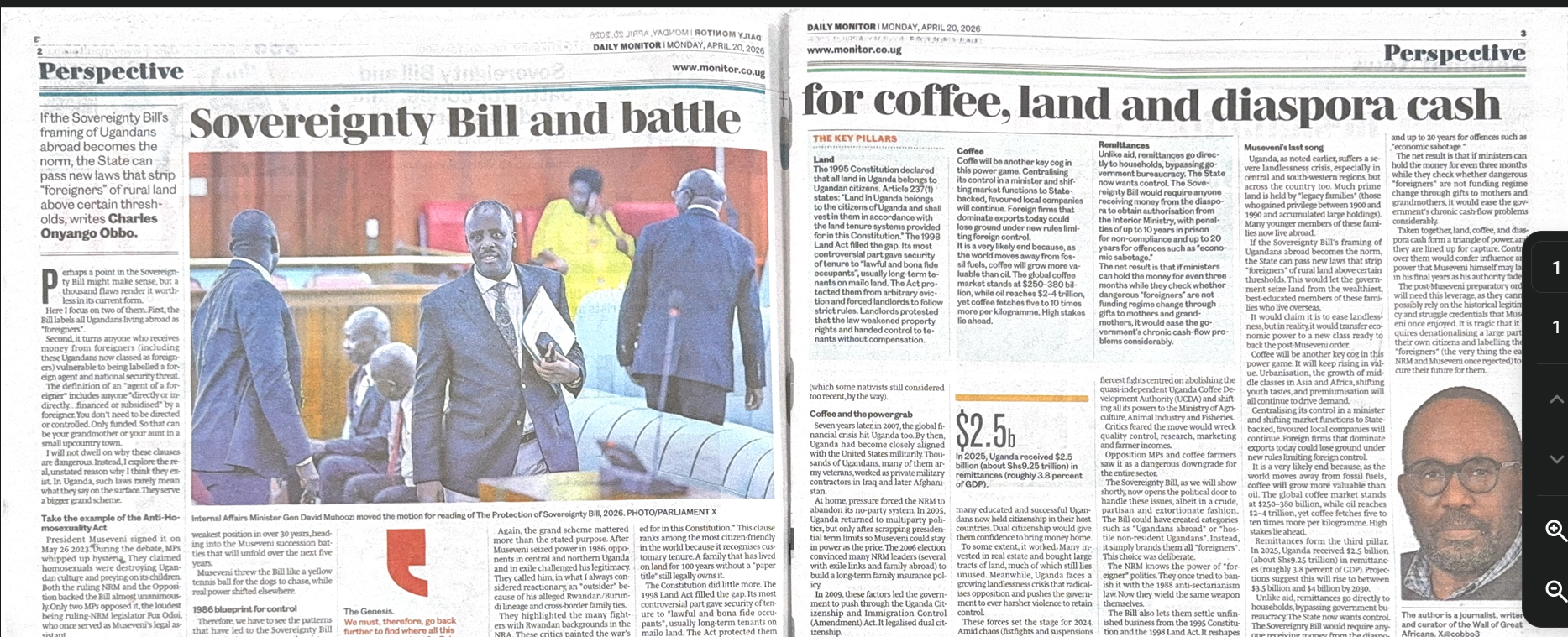
Sovereignty Bill and battle for Coffee, land and diaspora cash
Daily Monitor - 20th April 2026
If the Sovereignty Bill's framing of Ugandans abroad becomes the norm, the State can pass new laws that strip "foreigners" of rural land above certain thresh-olds, writes Charles Onyango Obbo.
FULL ARTICLE: Scanned Document
The Anti-Sovereignty Bill Signals The Overthrow Of The 1995 Constitution And Uganda’s Exit From The Democratic Order
Kampala, Uganda - 20 April 2026: Due to overwhelming public demand and the impossibly short one-week deadline Parliament gave for comments on the so-caled “Protection of Sovereignty Bill, 2026,” the Radical New Bar Governing Council of the Uganda Law Society (ULS) issues this cautionary statement. It is addressed to every Ugandan, to Parliament, and to the whole world — investors, governments, multilateral institutions, and friends of democracy everywhere. Our full written views will go to Parliament on Friday, 24 April 2026.
National Sovereignty: Legislating For A Rapidly Changing Global Order.
The Government of Uganda has taken a significant legislative step with the introduction of the National Sovereignty Bill, 2025. Presented to the NRM Parliamentary Caucus in March 2026, the Bill seeks to address one of the most sensitive and increasingly urgent issues of our time: foreign influence and interference in the internal affairs of sovereign states.
Predictably, its introduction has ignited debate. From familiar quarters—particularly segments of civil society and media commentary—the conversation has quickly been framed around concerns of “repression,” “censorship,” and “autocracy.”
FIND OUT MORE: NATIONAL SOVEREIGNITY- LEGISLATING FOR A RAPIDLY CHANGING GLOBAL ORDER
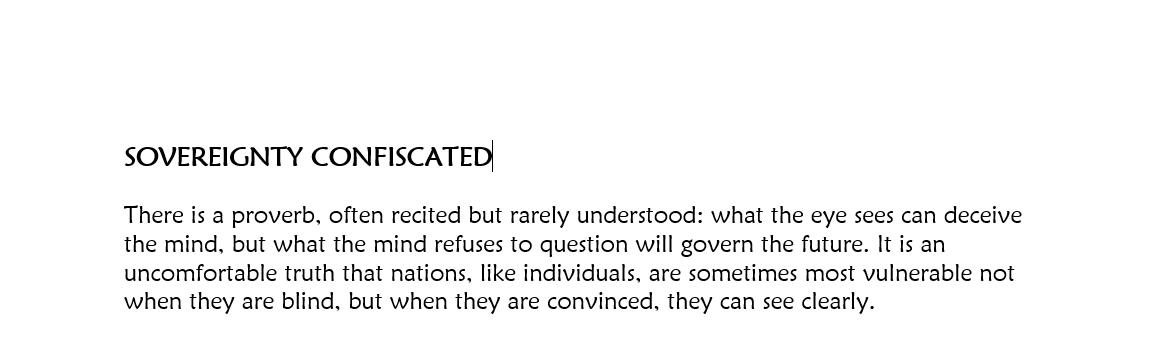
Sovereignty Confiscated
The proposed Protection of Sovereignty Bill, 2026 arrives clothed in the language of patriotism; measured, deliberate, almost noble. Its stated intention is simple enough: to shield Uganda from undue foreign influence, to ensure that national decisions are not quietly engineered by external actors whose interests may not align with those of the Republic. On its face, this is not only legitimate; it is necessary. No serious state abdicates its sovereignty willingly. No prudent government ignores the subtle ways in which influence travels; through funding, through policy advocacy, through seemingly benign partnerships.
READ MORE: SOVEREIGNTY CONFISCATED..
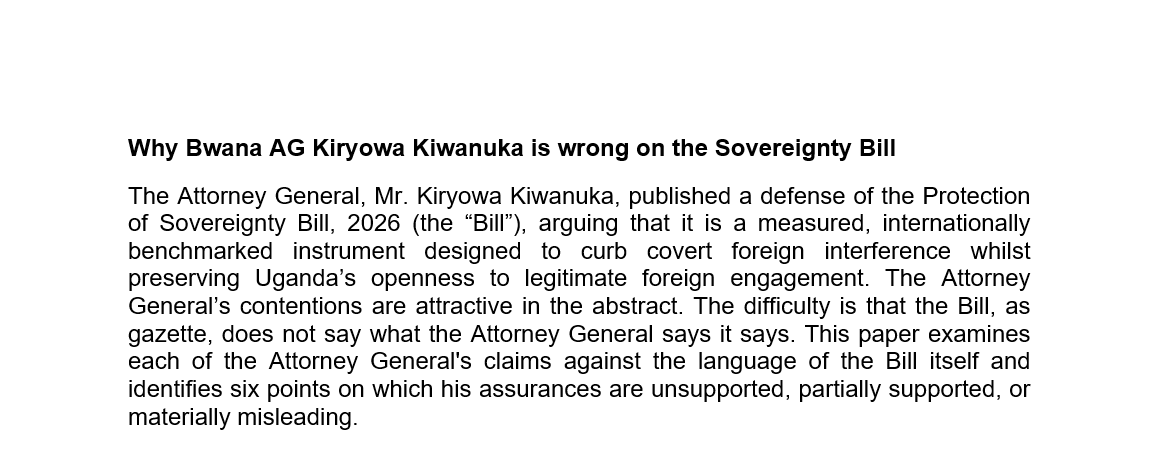
Why Bwana AG Kiryowa Kiwanuka is wrong on the Sovereignty Bill
The Bill does not distinguish between covert interference and open influence
The Attorney General draws a sharp distinction between "foreign influence", described as open, transparent engagement, and "foreign interference", described as covert, coercive, or deceptive action, and presents the Bill as targeting only the latter. This is the cornerstone of his defence, and it is wrong.
READ HERE: Why Bwana AG is wrong - (220426a)
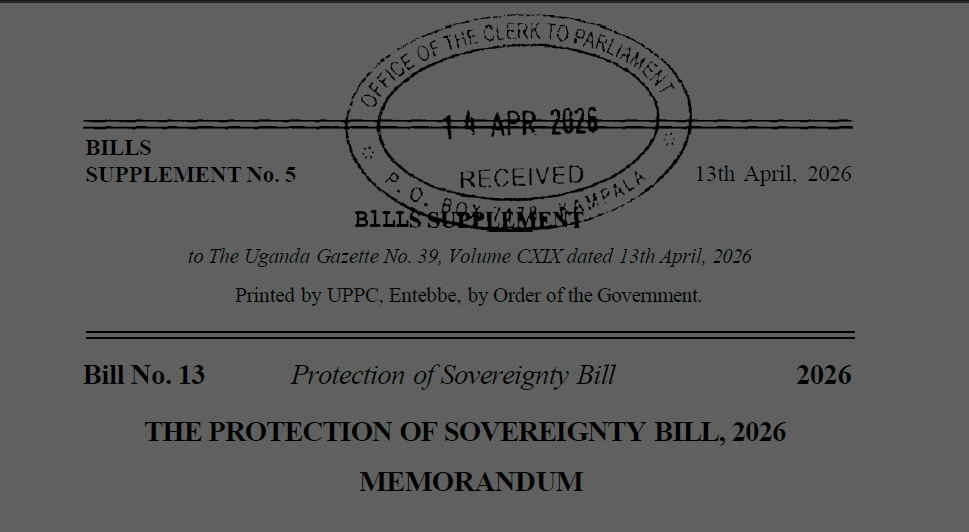
The Protection of Sovereignty Bill,2o26 Memorandum
The object of this Bill is to enact a law that seeks to provide for the protection of the sovereignty of the people of Uganda; to designate the department responsible for peace and security as the responsible entity for the registration and regulation of agents of foreigners; to provide for the protection of the sovereignty of Uganda; to designate the department responsible for peace and security as the responsible entity for the registration and regulation of agents of foreigners; to provide for the registration of agents of foreigners; to regulate the funding and any other assistance to agents of foreigner and for related matters.
READ HERE: The Protection of Sovereignty Bill,2026 (1)
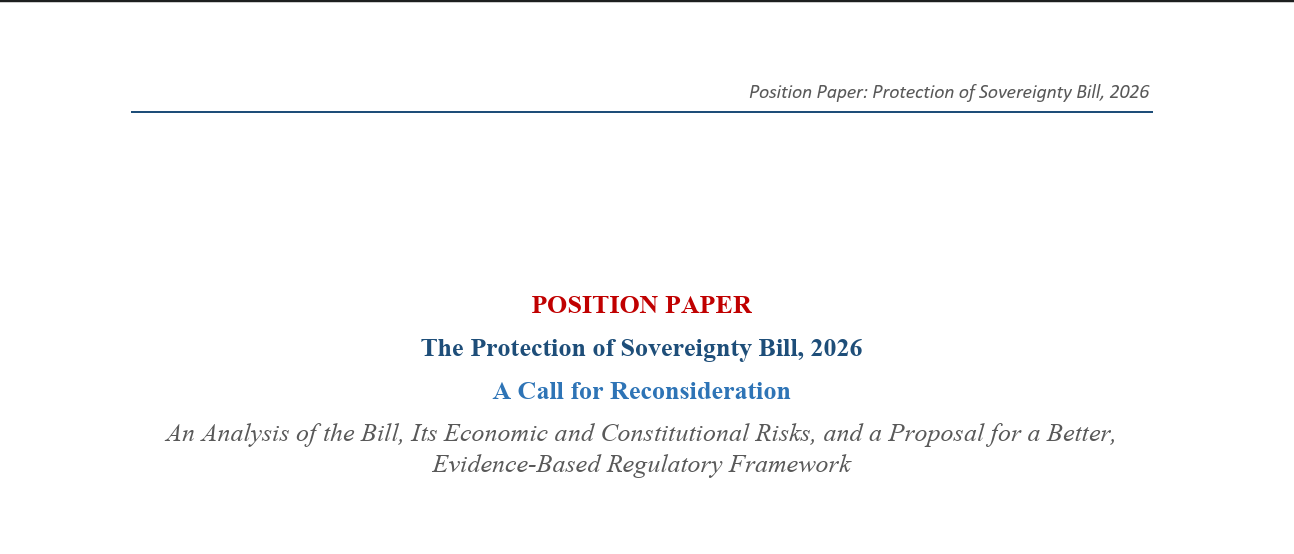
An Analysis of the Bill, Its Economic and Constitutional Risks, and a Proposal for a Better, Evidence-Based Regulatory Framework
Written and prepared by Sigmund M. Rugimbi Legal Theorist and Constitutional Policy Analyst
The Protection of Sovereignty Bill, 2026 (Bill No. 13) is presented as a measure to defend Uganda's self-determination. On close reading of its thirty clauses, however, the Bill does something very different. It creates a sweeping licensing regime under which millions of ordinary Ugandans, their families abroad, local NGOs, churches, mosques, law firms, banks, and development partners may be classified as "agents of foreigners," required to register with a security department in the Ministry of Internal Affairs, and subjected to criminal penalties of up to twenty years in prison and fines reaching four billion Uganda Shillings for corporations.
READ MORE ON THE SUBMITTED PAPER: Position_Paper_On Sovereignty_Bill
IRCU Press Statement on the Protection of Sovereugnty Bill 2026
The bill seeks to establish a legal framework that requires organizations and individuals to disclose foreign funding., stretch the Minister of Inter Affairs oversight powers on foreign funding and prevent actions perceived as undermining national sovereignty.
READ MORE: IRCU statement on Protection of Sovereignty Bill, 2026
Memorandum And Consultative Report of Ugandans in The Diaspora on The Protection of Sovereignty Bill, 2026
We recognize and support the legitimate objective of protecting Uganda’s sovereignty, constitutional order, and national interest from undue external influence. At the same time, feedback received through our consultation process indicates concern that certain provisions of the Bill, as currently drafted, will unintentionally affect Ugandan citizens residing abroad and their ordinary family support, economic, and civic activities.
“We cannot be defined as foreigners elsewhere and also at home. Are we stateless? ~ Uganda diaspora member in Zambia
FIND OUT MORE: Memorandum and Consultative Report of Ugandans in the Diaspora on the Protection of Sovereignty Bill, 2026
Ankole Stakeholders Coalition Memorandum Protection of Sovereignty Bill 2026
Following a regional stakeholder dialogue, we have identified grave concerns regarding the Bill’s current drafting. While we support the principle of national sovereignty, we observe that the Bill, in its present form, risks paralyzing local economies, disrupting essential service delivery, and undermining the constitutional rights of the very citizens it intends to protect.
Of particular concern to the Ankole region is the potential criminalization of diaspora remittances and the severe impact on community-based organizations (CBOs) and SACCOs. Our assessment indicates that the Bill’s broad definitions and excessive penalty regime fail the test of constitutional proportionality.
READ MORE: Ankole Stakeholders Coalition _Memorandum_Protection of Sovereignty Bill 2026
USA Memorandum on Sovereignity Bill
Uganda.s architecture and construction sector is deeply intertwined with diaspora-funded development, foreign direct investment, international consulting , donor-funded social infrastructure and cross border supply chains. Any law that constrains legitimate cross border contracting and payments can therefore materially affect project delivery, firm viability, employment and national development targets.
READ MORE ON THE LETTER: USA Memorandum on Sovereignity Bill

A Legal And Human Rights Analysis Of The Protection Of Sovereignty Bill, 2026 And Its Likely Impact On The Work Of Organisations Working With Criminalized Minorities
On Wednesday 15, April 2026, the Protection of Sovereignty Bill, 2026 was tabled before Parliament for the first reading by Gen. David Muhoozi, the Minister of State for Internal Affairs. The Bill is intended, according to its memorandum, to provide for the protection of the sovereignty of the people of Uganda, to provide for the sovereignty of Uganda and to regulate funding and any other assistance of agents of foreigners in Uganda, among others.
READ MORE: 260422hrapfanalysisoftheprotectionofsovereignitybill2026-1
Parliamentary Submission on The Protection of Sovereignty Bill, 2026
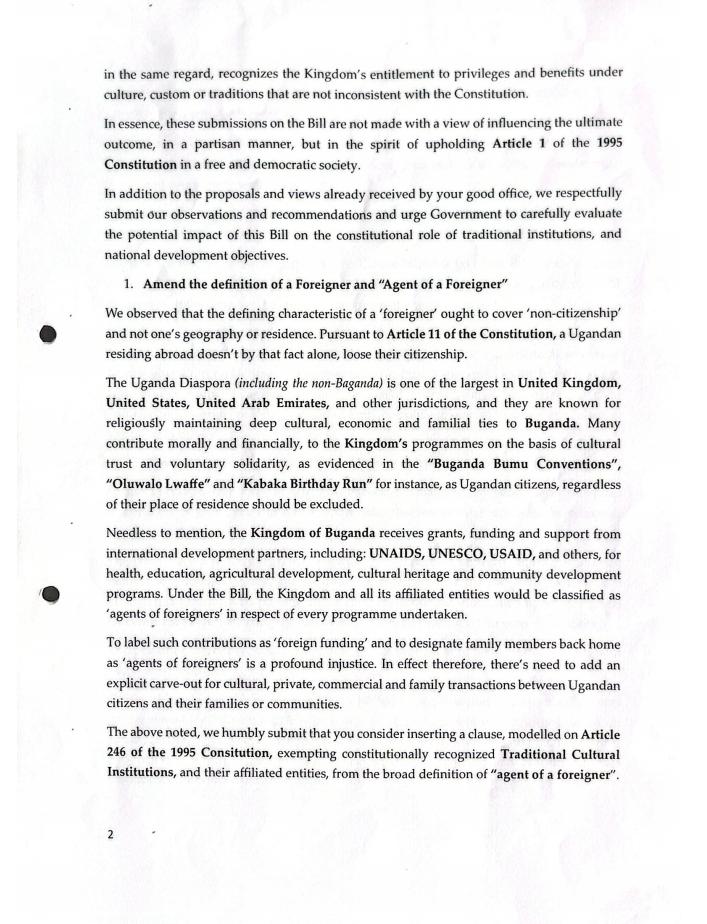
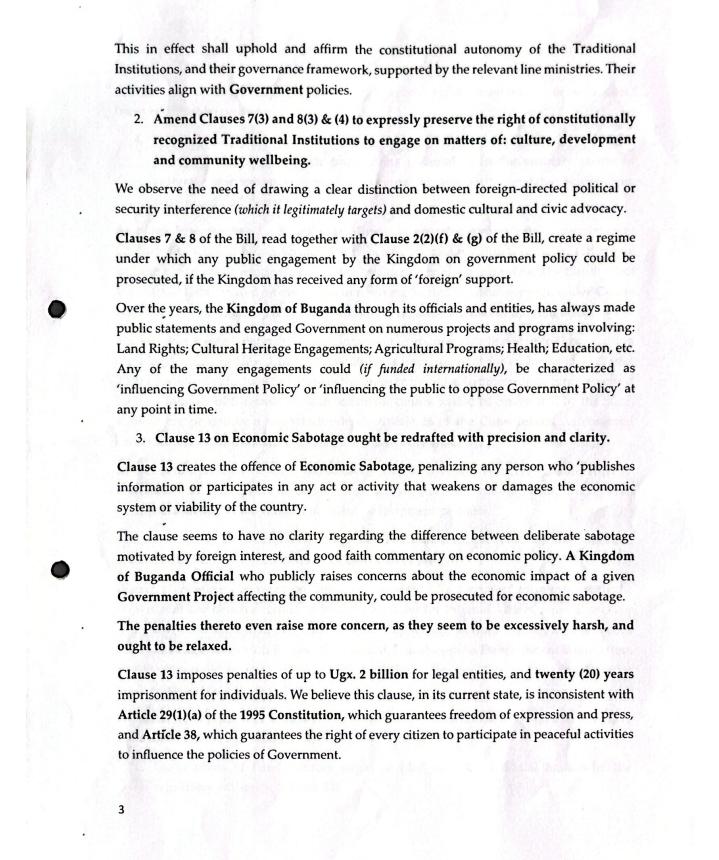
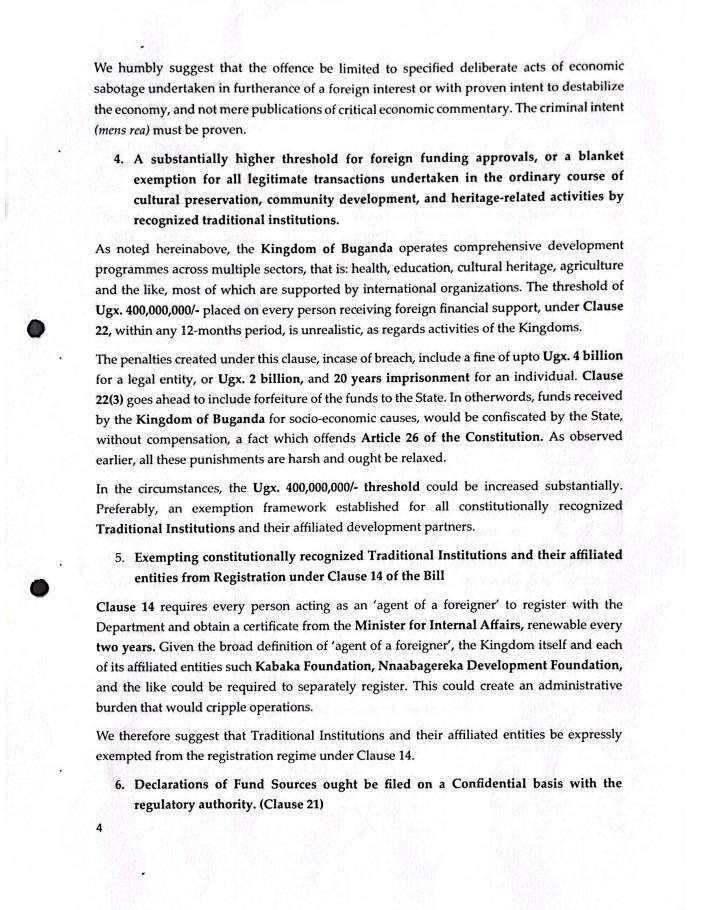
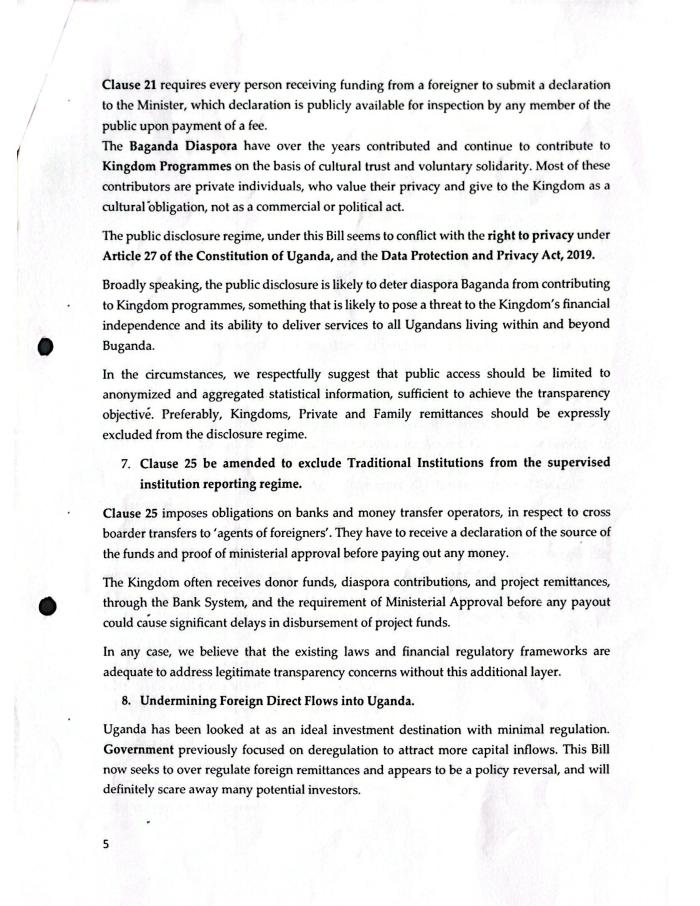
Submitted by: Owek. Patrick Katende
This submission is presented to assist Parliament in evaluating whether the Protection of Sovereignty Bill, 2026 meets the constitutional threshold required of legislation in a democratic state governed by the rule of law. The Bill is premised on a legitimate concern—the need to protect Uganda’s sovereignty from undue foreign influence. However, the constitutional question is not whether the objective is valid, but whether the means adopted are lawful, necessary, and proportionate within the framework of the Constitution of the Republic of Uganda, 1995.
MORE ON THE SUBMISSION: OWEK. PATRICK KATENDE - PARLIAMENTARY SUBMISSION ON THE PROTECTION OF SOVEREIGNTY BILL
Impact of the Protection of Sovereignty Bill 2026 on Research and Academic Freedom in Uganda
Research institutions fully support the goal of protection Uganda's national sovereignty, however, the proposed Protection of Sovereignty Bill, 2026, presents unintended, catastrophic risks to scientific research , funding for local innovation, and international academic collaborations.
READ MORE: Research Community Position Paper_Final 26April2026 j
The Chambers of Commerce Joint Submission on the Protection of Sovereignty Bill 2026
We present this submission in a spirit of genuine and constructive engagement. Uganda's right to protect the integrity of its constitutional order and to regulate the activities of foreign entities within its territory is a legitimate sovereign right that we do not contest. What we do contest — specifically, technically, and with proposed solutions — is the form in which the Protection of Sovereignty Bill, 2026 (Bill No. 13) exercises that right, which in its current form will materially damage Uganda's investment climate, create direct conflicts with Uganda's own existing laws, engage Uganda's bilateral investment treaty obligations, and produce consequences that are the opposite of what Uganda's development strategy requires.
CEPA On The Protection Of Sovereignty Bill 2026
The Centre for Policy Analysis is a public policy think tank that has, since 2010, worked on issues of legislation, governance, and public policy in Uganda.
Our submission is guided by that same approach to provide a practical, evidence-based perspective that supports that work of this committee.
READ MORE: CEPA ON THE PROTECTION OF SOVEREINITY BILL 2026
TASLAF - Final Legal Analysis of PSB PDF
This analysis is based on the Protection of Sovereignty Bill, 2026 (draft, 3 March 2026) reviewed against eleven pieces of Ugandan legislation. It does not constitute legal advice.
READ MORE: TASLAF - Final Legal Analysis of PSB PDF
Uganda's Protection of Sovereignty Bill 2026: What it means for business, investors and lenders
07 Apr 2026
BY Phillip Karugaba
The Ugandan government is considering a draft Protection of Sovereignty Bill 2026 (the "Bill"), which proposes sweeping restrictions on foreign influence over domestic policy, governance and public affairs. While the stated aim, protecting national sovereignty from undue foreign interference, is a legitimate objective shared by many jurisdictions, the Bill goes far beyond comparable legislation in other countries.
FULL ARTICLE: https://www.ensafrica.com/news/detail/11596/ugandas-protection-of-sovereignty-bill-2026-w
Ex-Museveni Minister "Butchers" Sovereignty Bill 2026, Challenges MPs to Reject Civic Aspyxiation
Exposure Uganda
April 17, 2026
By Nelly Otto
The Protection of Sovereignty Bill, 2026 doesn't not guard the border. It builds a fence around your mind, your wallet, and your mouth. It turns every Ugandan abroad into a "Foreigner"
Fr. Mathias Criticizes Sovereignty Bill, Calls Christians to Faith, Family Responsibility on Good Shepherd Sunday
Christians at Christ the King Parish in Kabale have been urged to embrace their role as “good shepherds” in society, with a renewed commitment to faith, family, and moral responsibility, alongside a strong call to reflect on national issues including the controversial sovereignty bill.
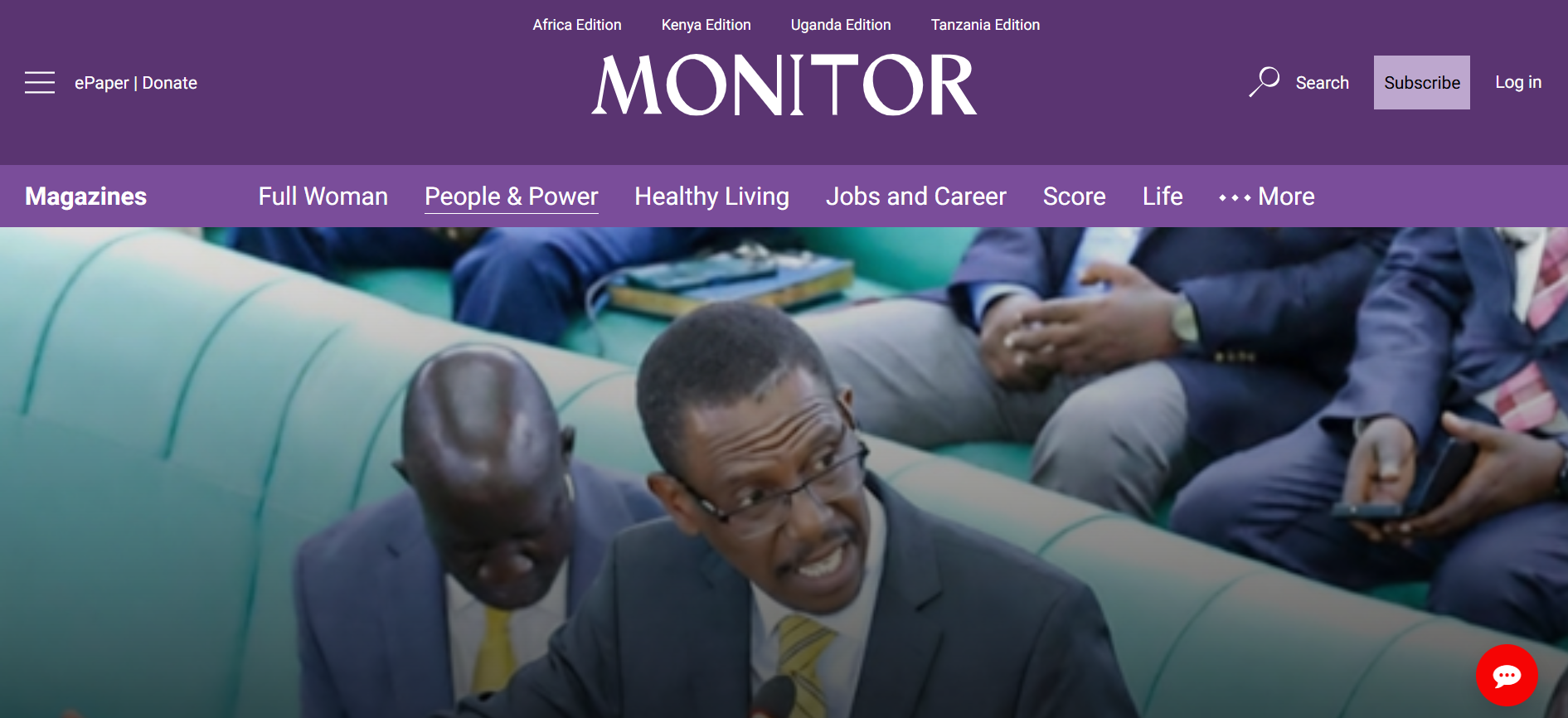
A Sovereigny mess or a sovereign remedy?
Daily Monitor
26th April 2026, Sunday
READ ARTICLE: https://www.monitor.co.ug/uganda/magazines/people-power/a-sovereign-mess-or-a-sovereign-remedy--5435412#story
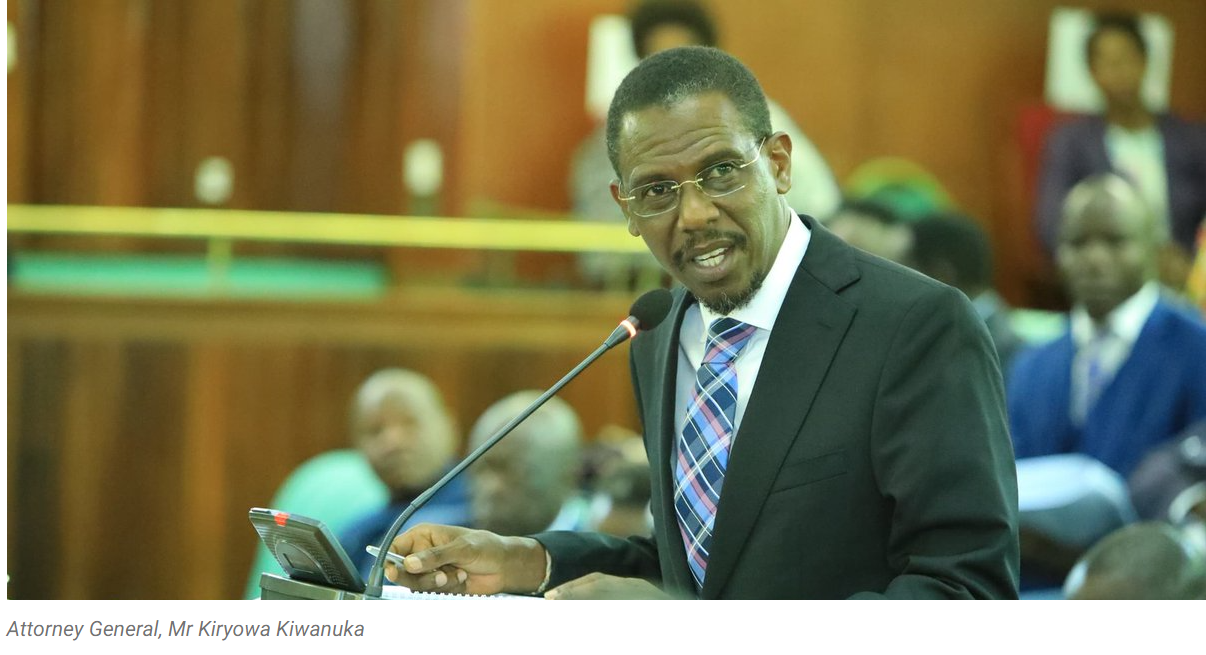
Why Bwana AG Kiryowa Kiwanuka is wrong on the Sovereignty Bill
Daily Monitor
Thursday 23rd April 2026
READ ARTICLE: https://www.monitor.co.ug/uganda/oped/commentary/why-bwana-ag-kiryowa-kiwanuka-is-wrong-on-the-sovereignty-bill-5433734
Uganda’s Sovereignty Bill: Protection or Self-Sabotage for Tourism and Investment?
Business Focus
April 19, 2026
by Isa Kato
The proposed Protection of Sovereignty Bill, 2026 is rooted in a legitimate and understandable objective which is to safeguard national independence from undue foreign influence. Every sovereign nation has that right. However, the question we must confront honestly is this; at what cost?
In its current form, this Bill risks protecting sovereignty with one hand while undermining Uganda’s economic future with the other.
READ ARTICLE: https://businessfocus.co.ug/ugandas-sovereignty-bill-protection-or-self-sabotage-for-tourism-and-investment/
How Protection of Sovereignty Bill could leave Uganda’s economy in despair
The Observer
The Protection of Sovereignty Bill 2026, a draft piece of legislation that remains hidden from public view, and whose ownership has split government ministries, has placed the diplomatic corps on tenterhooks, with some of them warning that if the bill is passed in its current form, they are ready to pack up their bags and leave, according to credible sources.
READ ARTICLE: https://observer.ug/business/how-protection-of-sovereignty-bill-could-leave-ugandas-economy-in-despair/
PFF Memorandum On The Sovereignty Bill
Views of People's Front for Freedom on the Protection of the Sovereignty Bill No 13 of 2026.
READ MORE: PFF MEMORANDUM ON THE SOVEREIGNTY BILL
Nup Diaspora Protection Of Sovereignty Bill Submission To The Joint Committee On Defence And Internal Affairs And The Committee On Legal And Parliamentary Affairs
The National Unity Platform Diaspora Members respectfully submit this memorandum to the Joint Committee on Defence and Internal Affairs and the Committee on Legal and Parliamentary Affairs. This submission offers a constitutional and policy assessment of the Bill, with particular focus on its implications for Ugandan citizens in the diaspora and the preservation of Uganda’s democratic order.

Memorandum on the Constitutional, Social, Economic, Civil and Political Implications of the Proposed Protection of Sovereignty Bill, 2026
I respectfully submit this memorandum to the Joint Committee of Legal and Parliamentary Affairs and Defense and Internal Affairs of Parliament to express serious concerns regarding the constitutional, Social, Economic, civil and political, and economic rights implications of the proposed Sovereignty Bill, 2026.
While the objective of safeguarding national sovereignty is legitimate, I submit that the Bill in its current form is overly broad, vague, and disproportionate, and risks fundamentally undermining constitutional governance, democratic participation, and Uganda’s economic and social development.
READ MORE: Matembe Memorandum
The Protection Of Sovereignty Bill: The First Agent Of A Foreigner
The title, “Regulating Foreign Influence Without Stifling Growth” which captioned the article of the learned Attorney General, published in the New Vision Newspaper on 21st April 2026, correctly captures the assumed legislative intent of the Ugandan Protection of Sovereignty Bill 2026. The article does better than the explanatory memorandum of the Bill by acknowledging that foreign influence is inevitable, adding that it cuts both ways and that it can be good or bad.
READ MORE: Legal Watch 02