
bireete-sarah-ehorn

Uganda’s Unpaid Medical Interns: A Crisis at the Heart of Public Healthcare

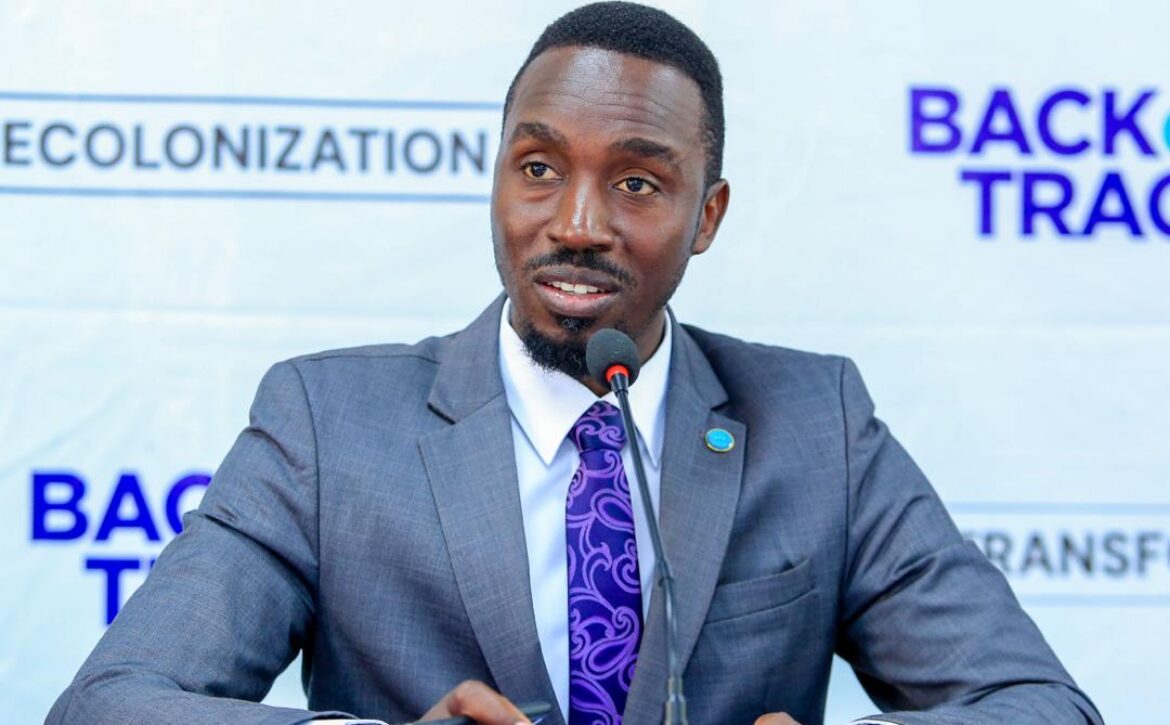
Written by Dr. Sarah Bireete

Uganda’s public health system is facing a deepening moral, legal, and policy crisis following the government’s refusal to pay medical interns. At the center of this dispute are young doctors who, after years of intense and costly training, are expected to shoulder the backbone of hospital care, without pay. The decision has far-reaching consequences for healthcare delivery, medical education, and the future of the profession in Uganda

Medical interns in Uganda are not observers or trainees in a casual sense. They are frontline healthcare providers. In many public hospitals, interns cover critical staffing gaps, run wards, attend to emergencies, clerk patients, prescribe under supervision, and provide round-the-clock care.

In practice, interns do most of the regular medical work that keeps hospitals functional, especially in regional referral hospitals where shortages of senior doctors are chronic. Demotivating interns through non-payment directly undermines patient care, increases preventable deaths, and overburdens the few fully employed doctors who remain. Refusing to pay interns while continuing to rely on their labor amounts to institutionalized exploitation.

Before internship, a Ugandan medical doctor spends at least five years at university, followed by internship as a mandatory requirement for full registration. Medical education is among the most demanding and expensive courses in the country. By the time students reach internship, many come from families already financially exhausted. Internship pay is therefore not a luxury, it is basic subsistence, covering rent, food, transport, among others.

Denying interns pay after such prolonged investment effectively turns medical training into a pathway of debt, distress, and despair. The situation poses a sharp dilemma, especially for government-sponsored medical students.

On one hand, the state argues fiscal constraints and frames internship as “training.” On the other hand, it compels graduates to serve, posts them to hospitals, assigns shifts, and disciplines them as workers. This contradiction raises fundamental questions. If internship is compulsory national service, why is it unpaid? Why should interns offer an unpaid service in government hospitals? What’s government’s commitment to universal healthcare?

Uganda’s approach stands in stark contrast to practices across much of Africa. In Kenya, Medical interns are salaried government employees, with formal contracts and monthly pay. In South Africa, Interns receive structured remuneration and are fully integrated into the public service payroll. In Rwanda, Internship is funded as part of national health workforce planning, with clear state responsibility. In Ghana, House officers (interns) are paid and recognized as essential health workers.

In these countries, governments acknowledge a basic truth: you cannot sustain a health system on unpaid labor.
Uganda’s refusal to pay interns risks isolating the country, accelerating brain drain, and making medicine unattractive to talented students, especially those from poor backgrounds.

The unpaid internship policy has consequences beyond medical interns themselves. Patients suffer from demoralized staff and service disruptions
Rural and public hospitals face collapse as interns withdraw labor. Medical students reconsider their career choices or plan to leave the country. Public trust in health governance erodes.

Uganda cannot claim commitment to universal healthcare while refusing to pay the very doctors who keep hospitals running. Internship is not charity work; it is essential labor performed after years of specialized training. Government decision undermines its health system, exploits young professionals, and jeopardizes the future of medical education in Uganda.

Paying medical interns is not merely a budgetary decision; it is a test of justice, foresight, and national priorities.

Read More
92754492-2ab9-45e4-8701-b38f1fdf2060

Rebuttal: The Anti-Sovereignty Bill Is Not Protection — It Is a Constitutional Coup.

By Asiimwe Anthony

Since 6AM today, my phone has been inundated with calls from the Bar, the public, and the press.

They are furious at the 923-word article by Enoch Barata in New Vision of 20 April 2026 defending the so-called Sovereignty Bill. They demand a scorching rebuttal.

Enoch Barata is not just a lawyer. He is the Director of Legal Services of the National Resistance Movement.

This is my rebuttal, as Vice President of the Uganda Law Society.

The NRM Legal Director’s defence of the so-called National Sovereignty Bill (in reality the Anti-Sovereignty Bill) presents a familiar script: “the world is changing, foreign interference is real, Uganda must adapt.”

But beneath the polished references to elitist acronyms such as FARA, FICA and the global trends he cites, lies a simple constitutional truth that the article conveniently ignores.

Sovereignty in Uganda belongs to the people, not the Government. But who are the people?

The people are the voters from whom NRM hid this sovereignty-altering Bill during the recent elections. The draconian bill it is rushing to pass while Parliament is closing. The people are the millions of voters who will not get to read Barata’s good English in the government’s 20,000-circulation English language newspaper.

The people are the multitudes of rural and urban poor victims of NRM’s 30-year failure to implement Article 4 of the 1995 Constitution: the state obligation to provide every citizen with a translated copy of the Constitution in their local language, plus a permanent programme of civic education.

Article 1 of our Constitution is unambiguous: “All power belongs to the people who shall exercise their sovereignty through their will and consent.”

The Bill does not protect this sovereignty. It transfers it to the Executive by letting the Minister and a new secret Department of Peace and Security decide “Government interests” and punish dissent. That is not safeguarding sovereignty — it is overthrowing it.

The referendum requirement is fatal.
Any law that alters the basic structure of the Constitution — especially the location of sovereignty itself — must be approved by the people in a national referendum under Article 260(2). This Bill makes exactly those changes without ever asking Ugandans to vote. It is therefore dead on arrival: unconstitutional, null and void. No amount of international comparison can cure that defect.

The Bill fails every international human-rights litmus test.
Even if the procedural flaw were ignored, the substance collapses under established standards:

R v Oakes proportionality test (the gold standard for justifying limits on rights): The Bill’s unverified objective may sound “pressing,” but its means are arbitrary, unfair and irrational. It is not rationally connected to any genuine threat — it sweeps in ordinary criticism, diaspora voices and legitimate NGO work. It fails minimal impairment and proportionality: the harm to free speech, association and political participation grossly outweighs any benefit.

R v Big M Drug Mart principle: Laws cannot impose a state ideology or chill the free exercise of fundamental rights. This Bill does precisely that by criminalizing criticism of Government policy as “economic sabotage” and redefining Ugandans abroad as “foreigners.”

UN Human Rights Committee General Comment 34 (Article 19): Restrictions on expression must be precisely drafted, pursue a legitimate aim, and be necessary and proportionate. Vague, overbroad provisions that grant unfettered executive discretion — exactly what this Bill contains — are classic violations. Criticism of Government is the lifeblood of democracy, not a crime.

UN Special Rapporteur Maina Kiai’s reports: Kiai repeatedly warned that “foreign agents” registration schemes and foreign-funding restrictions are tools to stigmatize, burden and criminalize civil society. They violate the right to freedom of association (ICCPR Article 22) because access to foreign funding is an integral part of that right. He documented how such laws — often sold as “transparency” — are in reality designed to silence independent voices. This Bill follows the exact playbook he condemned.

African Commission on Human and Peoples’ Rights principles: The Commission’s standards on freedom of expression, association and NGO regulation demand the same: any restriction must be necessary, proportionate and non-discriminatory. Blanket criminalization and funding cut-offs fail that test.

The Director cites the United States, EU, Canada, Australia and Singapore as models. But those laws are narrow, focused on covert political influence by actual foreign principals, and subject to judicial oversight and transparency. They do not criminalize domestic criticism, brand citizens “foreigners,” or starve independent schools, hospitals and media of funds. Uganda’s Bill does all three — and more.

True sovereignty is self-determination by the people.
The Bill replaces “power belongs to the people” with “power belongs to Government.” It does not adapt to a changing world; it adapts the Constitution to the fears of those in power. That is not legislation for sovereignty — it is legislation against the sovereign people of Uganda. The very definition of a coup d’état!

The Uganda Law Society, through our Radical New Bar Governing Council led by President Isaac K. Ssemakadde, SC, writing from exile this morning, has already said it plainly in our cautionary statement: this Bill is an act of treason against the Constitution (Article 3). It must be rejected outright. The greatest act of patriotism today is to defend the 1995 Constitution from those who no longer respect it.

The author is the Vice President, Uganda Law Society​​​​​​​​​​​​​​​​​​​​​​​​​​​​​​​​​​​​​​​​​​​​​​​​​​.

Read More
gf6lWrri

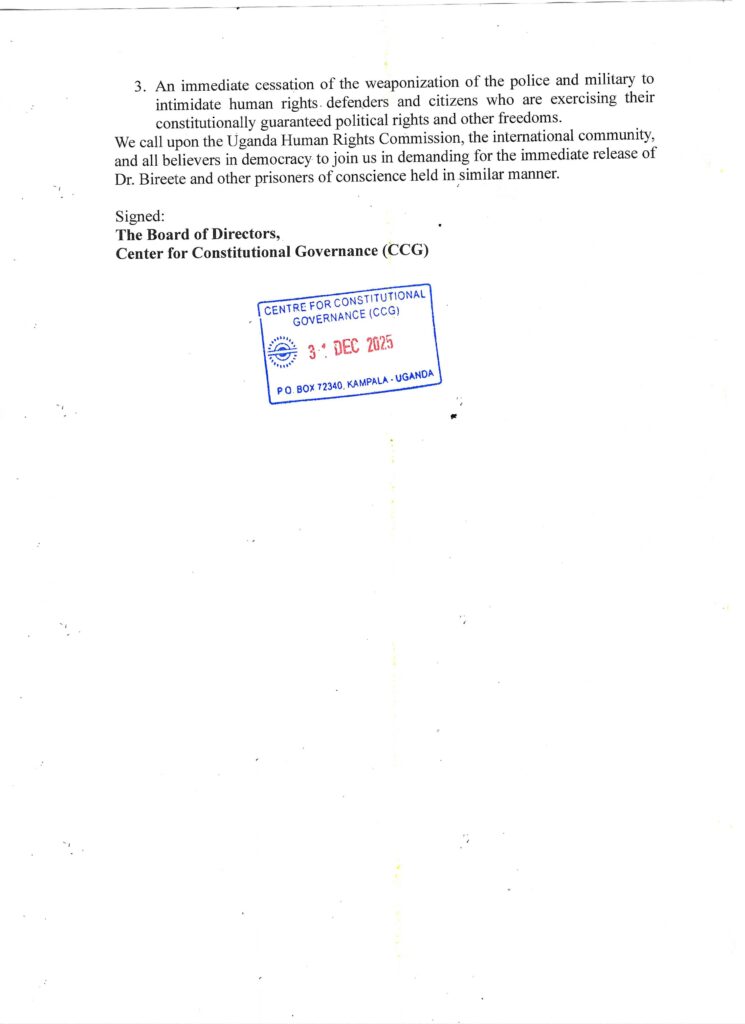
CCG Board Statement on the arrest of Dr. Sarah Bireete.

The Center for Constitutional Governance (CCG) strongly condemns the arbitrary arrest and ongoing illegal detention of our Executive Director, Dr. Sarah Bireete, by the Uganda Authorities.
STATEMENT: FOR IMMEDIATE RELEASE

Read More