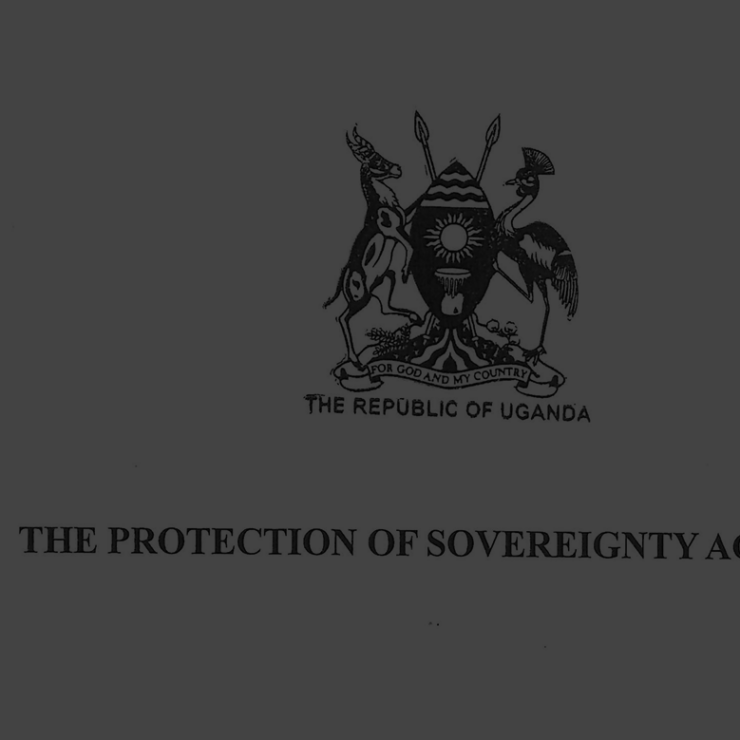
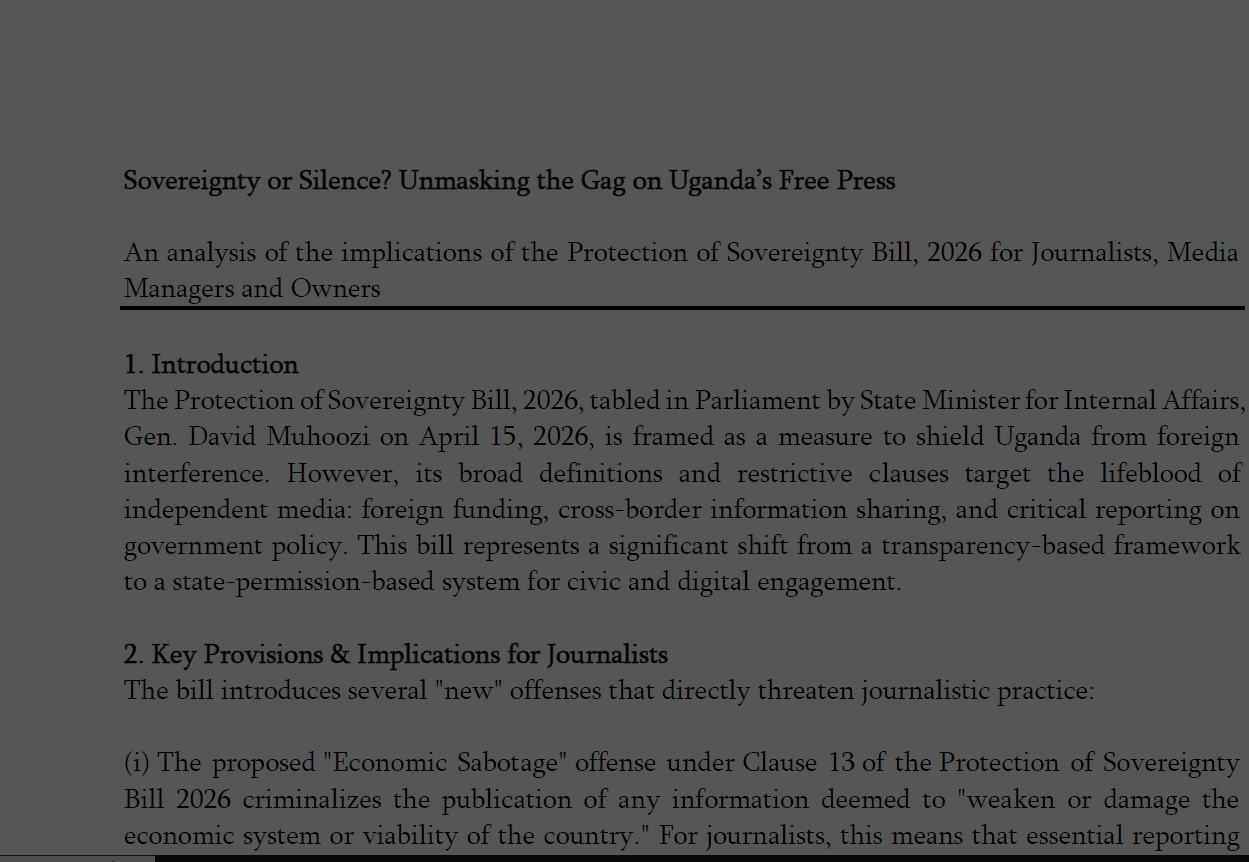
An analysis of the implications of the Protection of Sovereignty Bill, 2026 for Journalists, Media Managers and Owners.
This document analyzes the implications of Uganda’s Protection of Sovereignty Bill, 2026, highlighting its threats to press freedom, media operations, and constitutional rights.
Overview of the Bill: The Bill, introduced in Parliament to purportedly protect Uganda from foreign interference, broadly restricts foreign funding, cross-border information sharing, and critical reporting. It shifts regulation from transparency to a state-permission model, risking severe suppression of independent media and dissent.
Key Provisions and Threats to Journalists: The Bill criminalizes “economic sabotage,” penalizing any publication damaging the economy with up to 20 years imprisonment, violating constitutional guarantees of free speech. It redefines “foreigner” broadly, including Ugandan citizens abroad, criminalizing quoting or sourcing from the diaspora and targeting media receiving foreign revenue, infringing privacy and access to information rights. It prohibits “foreign agents” from participating in governance issues, including civic education and election coverage, and restricts influence on government policies without Cabinet approval, undermining citizens’ participation rights and breaching constitutional protections. The law also considers economic reporting as sabotage, threatening vital economic journalism.
Implications for Media Owners and Managers: The Bill introduces personal liability for media executives, with potential 20-year prison sentences for editorial decisions or failure to disclose foreign payments. It imposes draconian fines and asset seizures, risking bankruptcy for media outlets. The “Banking Trap” requires banks to seek ministerial approval before releasing foreign-linked funds, risking account freezes and limiting capital access. Operational licensing becomes a tool for control, allowing the Minister to revoke licenses arbitrarily, bypassing existing regulators like the Uganda Communications Commission and the Media Council. The Bill conflicts with current laws and creates overlapping, unpredictable regulatory layers, undermining legal certainty.
Redundancy and Constitutional Violations: The Bill largely duplicates existing legislation such as the Anti-Money Laundering Act and the Press and Journalist Act, rendering it unnecessary. It breaches constitutional rights to free speech and participation, as well as international treaties like ICCPR and the African Charter. It also disregards the UN Declaration on Human Rights Defenders, which affirms organizations’ rights to resources and freedoms.
Global Precedents and Risks: Similar laws in Russia, Georgia, Nicaragua, Kyrgyzstan, Azerbaijan, Hungary, Zimbabwe, and North Korea have led to media suppression, criminalization of dissent, and economic strangulation of independent outlets. These examples demonstrate that such “sovereignty” laws often result in media collapse, exile of journalists, and severe restrictions on free expression, with some countries experiencing total media shutdowns or imprisonment of critical voices.
Conclusion and Call to Action: The Bill is an unconstitutional, excessive measure that threatens Uganda’s democratic fabric by criminalizing legitimate journalism and imposing financial and operational controls. It must be withdrawn. Urgent actions include submitting formal objections during public consultations, lobbying key government figures to amend or reject problematic clauses, uniting civil society and media groups to oppose the law publicly, and launching a two-week media campaign to raise awareness and mobilize public resistance against the legislation.
READ MORE : Impact of the Protection of Sovereignty Bill on Journalism, and the Media Industry-1